
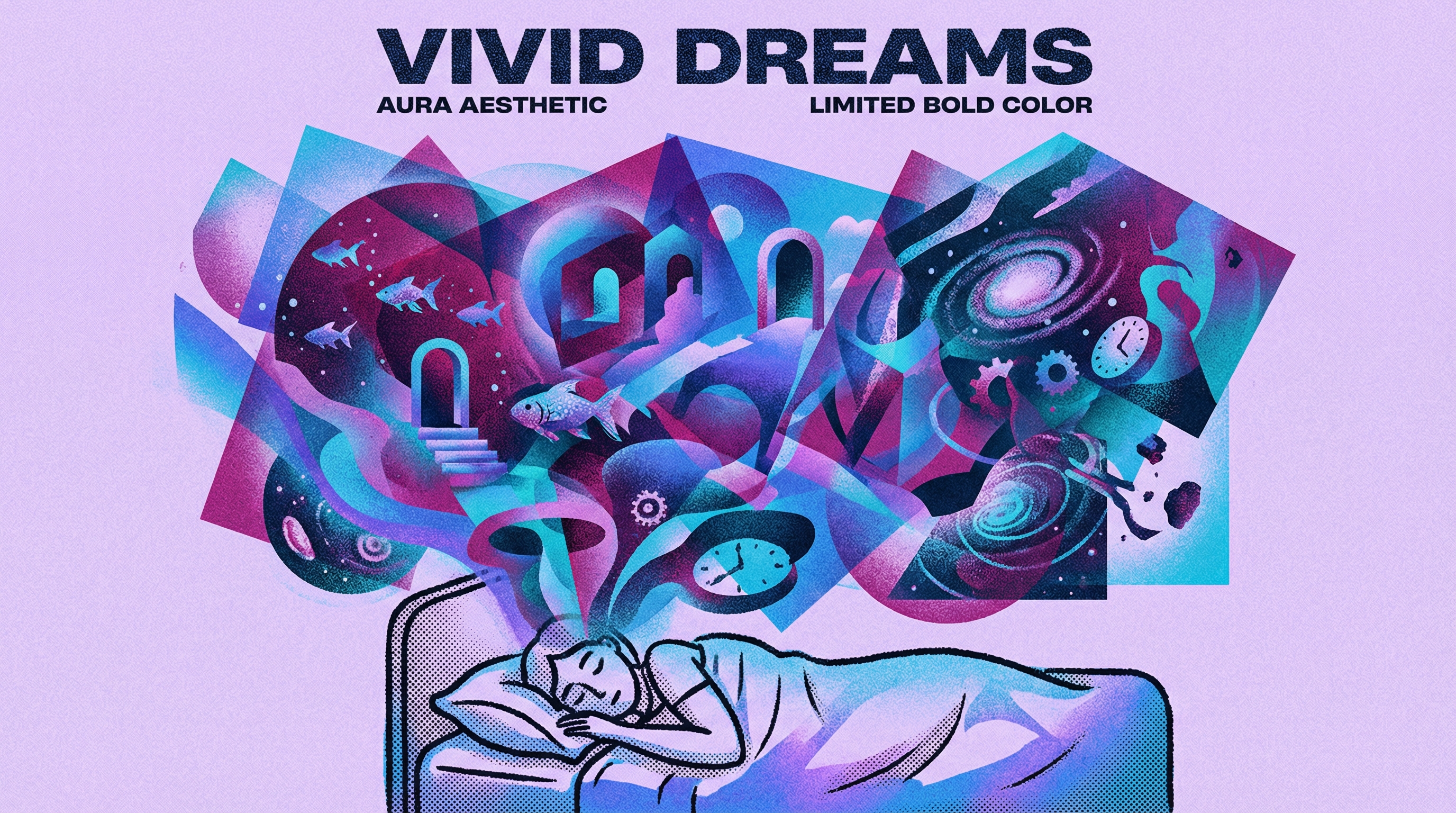
Key Takeaways
- ✓Vivid dreams occur during longer or more intense REM sleep periods
- ✓The most common triggers: stress, medications, hormonal changes, sleep deprivation, and substances
- ✓REM rebound after sleep deprivation is the single most reliable producer of extremely vivid dreams
- ✓Vivid dreams serve an emotional processing function and are generally not a cause for concern
Quick Answer: Vivid dreams happen when your REM sleep is longer or more intense than usual. The most common triggers are stress, sleep deprivation (which causes REM rebound), hormonal changes, medications (especially antidepressants), and substance withdrawal. They're usually harmless and indicate that your brain is actively processing emotions, but sudden persistent changes in dream vividness can signal something worth investigating.
What makes a dream vivid?
A vivid dream is any dream that feels unusually real, detailed, and emotionally intense compared to your typical dreaming baseline. Some people describe them as "HD dreams," where colors are brighter, sounds are clearer, and the emotional weight hits harder than usual.
From a neuroscience perspective, dream vividness correlates with the length and intensity of the REM sleep period during which the dream occurs. Your longest REM periods happen in the last two to three hours of sleep, which is why the most vivid dreams tend to happen right before you wake up.
The key biological mechanism is REM density: how much eye movement activity happens during a REM period. Higher REM density means more active dreaming, more detailed imagery, and more emotional engagement. Anything that increases REM density or extends your final REM period will make your dreams feel more vivid.
What causes vivid dreams?
Anything that disrupts normal sleep architecture or increases REM sleep intensity. There are seven primary causes, and most vivid dream episodes can be traced to at least one of them.
| Cause | How It Increases Dream Vividness | Duration |
|---|---|---|
| Sleep deprivation / REM rebound | Brain compensates with longer, more intense REM periods | Temporary |
| Stress and anxiety | Emotional hyperarousal increases REM activation and emotional dream content | Ongoing |
| Hormonal changes | Estrogen and progesterone fluctuations alter sleep architecture and REM density | Cyclical |
| Antidepressants (SSRIs) | Suppress REM at first, then cause intense REM rebound | Medication-dependent |
| Alcohol withdrawal | Alcohol suppresses REM; stopping triggers aggressive REM rebound | 1-2 weeks |
| Late-night eating | Increased metabolism raises brain temperature and activity during sleep | Night-to-night |
| Pregnancy | Hormonal surges + disrupted sleep + emotional processing create a perfect storm | Trimester-dependent |
The single most reliable predictor of vivid dreams is REM rebound: the brain's compensatory response after being deprived of REM sleep. If you've been sleeping poorly for a week and then finally get a full night, your brain crams in extra-long, extra-intense REM periods. The dreams during those periods can feel more real than waking life. This same REM disruption mechanism is why sleep paralysis episodes also cluster during periods of poor sleep.
Which medications cause vivid dreams?
Several common medication classes are known to alter dream vividness. The mechanism is usually the same: the medication suppresses REM sleep, and when REM eventually breaks through (or when you stop the medication), the dreams come back with amplified intensity.
- SSRIs and SNRIs (antidepressants): Sertraline, fluoxetine, venlafaxine, and similar drugs suppress REM sleep. Many people report abnormally vivid dreams, especially when starting the medication, adjusting doses, or discontinuing it.
- Beta-blockers: Propranolol and similar medications cross the blood-brain barrier and can increase REM density. Melatonin co-administration has been shown to mitigate this effect in some patients.
- Nicotine patches: Continuous nicotine delivery during sleep alters cholinergic activity, which directly affects REM sleep and dream vividness.
- Melatonin supplements: Higher doses can increase REM sleep duration, producing more vivid dreams. This is generally considered harmless.
- Anticholinergics: Medications like diphenhydramine (Benadryl) can affect dream content and intensity.
If you suspect your medication is causing disruptive vivid dreams, talk to your prescriber. Adjusting the dose or timing (taking the medication in the morning instead of at night, for example) can sometimes reduce the dream intensity without compromising the medication's primary function.
Track how medications affect your dreams
DreamStream's voice journal and AI analysis can help you identify correlations between medication timing, dosage changes, and dream vividness. Share the data with your prescriber for informed discussions.
Why does stress make dreams more vivid?
Because stress activates your brain's emotional processing system, and that system runs its heaviest workload during REM sleep.
"REM sleep serves a critical function in emotional memory processing. Heightened emotional experiences during waking hours increase both the frequency and intensity of emotionally charged dream content."
When you're under chronic stress, your limbic system (the brain's emotional center) stays in a heightened state. During REM sleep, the limbic system is already more active than during waking hours. Combine baseline stress with REM activation, and you get an emotional processing system running at full output, which translates to dreams that are intensely vivid, often with strong emotional themes like being chased, failing, or losing control.
There's an evolutionary argument for why this happens: processing threatening scenarios during sleep may help prepare you for real-world threats. Whether or not that theory holds, the practical result is clear. More stress equals more vivid dreams.
Are vivid dreams good or bad?
Neither inherently. Vivid dreams are a feature of healthy REM sleep, not a bug. They serve a genuine function in emotional regulation, memory consolidation, and creative problem-solving.
Vivid dreams become a problem only when:
- They disrupt your sleep: Waking up from intense dreams repeatedly can fragment your sleep and leave you tired.
- The content is consistently distressing: Vivid nightmares nightly may indicate PTSD, chronic anxiety, or medication side effects. Our guide on nightmare relief and AI therapy covers evidence-based techniques for reducing nightmare frequency.
- Dream-reality confusion: If vivid dreams are so realistic that you have persistent difficulty distinguishing dream memories from waking memories, that's worth discussing with a professional.
- Sleep avoidance: If the vividness of your dreams makes you dread going to sleep, the secondary sleep deprivation becomes the actual health concern.
For most people, vivid dreams are simply their brain doing its job, just louder than usual. Many creative people, artists, writers, musicians, actively value vivid dreams as a source of inspiration and insight.
How do I reduce vivid dreams if they're disruptive?
Address the underlying cause, not the dreams themselves. Since vivid dreams are a symptom, the interventions target whatever is amplifying your REM:
- Improve sleep hygiene: Consistent sleep schedule, dark room, cool temperature, no screens 30 minutes before bed. These basics reduce sleep disruptions that trigger REM rebound.
- Manage stress: Any effective stress-reduction practice (exercise, meditation, therapy, journaling) will reduce the emotional load your brain processes during REM.
- Review medications: If vivid dreams started with a new medication, discuss timing or dosage adjustments with your prescriber.
- Avoid alcohol close to bedtime: Alcohol suppresses REM in the first half of the night and causes aggressive REM rebound in the second half, producing vivid dreams in the early morning hours.
- Don't eat heavy meals before bed: Late-night eating increases metabolism during sleep, which can intensify dream activity.
- Track your dreams: Journaling paradoxically helps. Processing dream content while awake can reduce the brain's need to repeat processing during subsequent REM periods.
Identify what's driving your vivid dreams
DreamStream's Dream Radar tracks dream intensity, emotional tone, and recurring themes over time. Cross-reference vivid dream spikes with life events, medication changes, and stress periods to identify your personal triggers.
The bottom line
Vivid dreams are the result of your brain's emotional processing system running at high intensity during REM sleep. Stress, medications, hormonal changes, and sleep deprivation are the most common amplifiers. In most cases, vivid dreams are a sign that your brain is working hard to process your life, not a sign that something is wrong. If they're disruptive, address the root cause rather than the dreams themselves.