
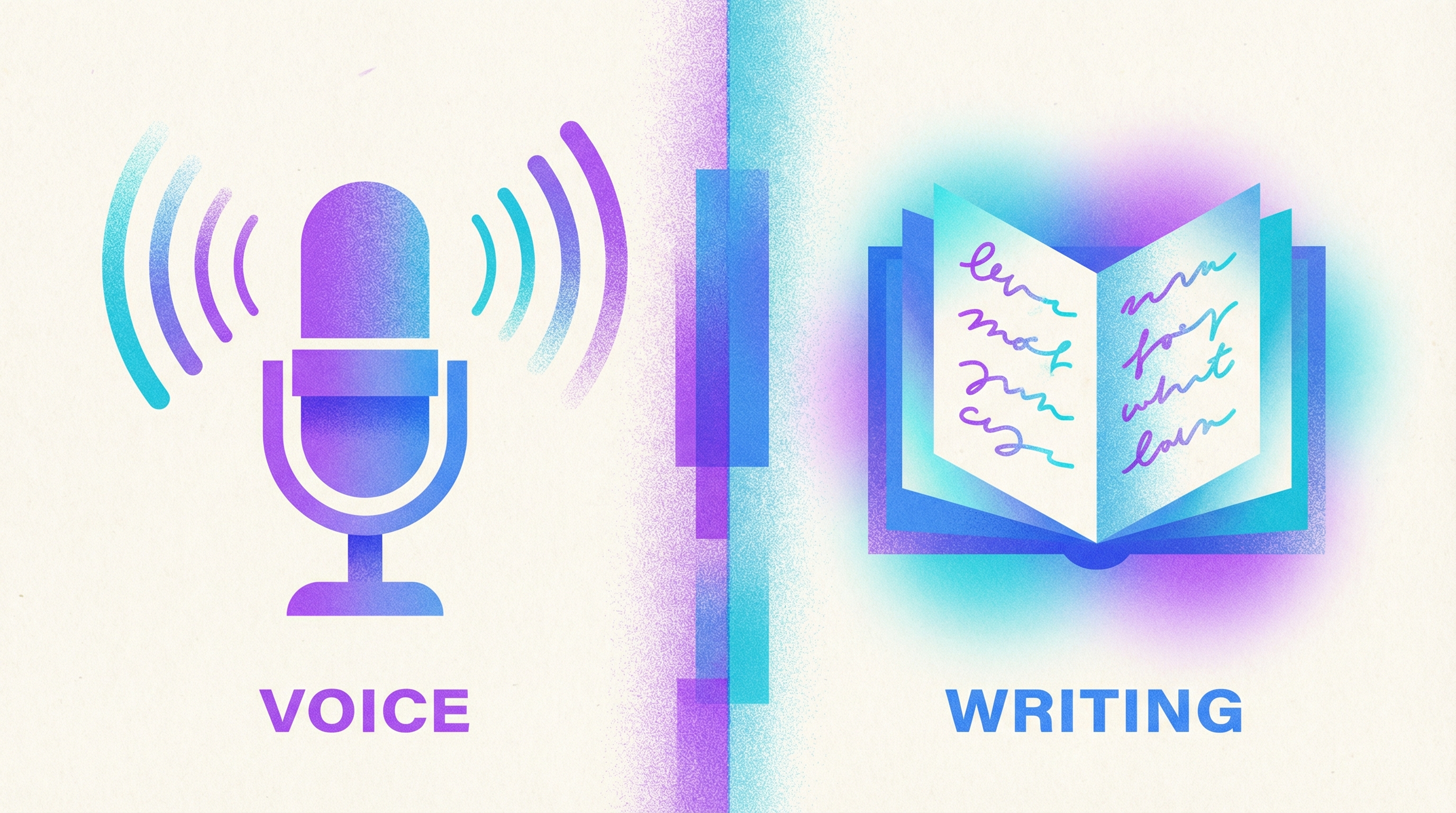
Key Takeaways
- ✓Voice recording is 7x faster: 125 wpm speaking vs 18 wpm typing
- ✓Speaking captures emotional tone and nuance that text misses
- ✓Voice works when you're still half-asleep; writing requires full wakefulness
- ✓Writing offers better organization and searchability for some users
Quick Answer: Voice recording is generally better for dream capture. You can speak at 125 words per minute vs. typing at 13-19 wpm when groggy from sleep. This 7x speed advantage lets you capture full dreams within the critical 30-second memory window before details fade.
The Core Trade-off
Dream journaling has two fundamental constraints: speed (dreams fade within minutes) and usability (you're capturing content while barely awake). Voice and text optimize for different sides of this trade-off.
Voice recording maximizes speed. You can capture a complete dream narrative in 30 seconds while still lying in bed with your eyes closed. Text maximizes organization. You get searchable, structured entries that are easy to reference later.
The question isn't which is objectively "better." It's which matches your constraints.
Speed: The 30-Second Race
The numbers are stark. Average speaking speed is 125-150 words per minute. Average typing speed is 38-40 wpm for fully awake adults. But when you've just woken from REM sleep, groggy and disoriented, typing speed drops to 13-19 wpm.
This matters because dream memories decay rapidly. Research shows 50% of content is gone within 5 minutes. Voice recording lets you dump the entire dream into audio in one unbroken stream, within that critical window. Typing forces a slower, more deliberate process that often loses content before you can capture it.
| Metric | Voice Recording | Writing/Typing |
|---|---|---|
| Words per minute | 125-150 wpm | 13-19 wpm (groggy) |
| Time to capture full dream | 30-60 seconds | 3-5 minutes |
| Emotional nuance | High (tone, pace) | Low (flat text) |
| Works half-asleep? | Yes | No |
| Searchability | Requires transcription | Native |
| Best for | Immediate capture | Later reflection |
Emotional Capture: Voice Wins
Here's something researchers often miss: dreams aren't just content. They're experiences. The terror of being chased, the joy of flying, the confusion of impossible architecture. These emotional qualities are encoded in how you speak, not just what you say.
"Voice recordings capture paralinguistic cues, including tone, pace, and emotional inflection, that provide rich data for understanding dream experiences. These cues are entirely absent from written transcripts."
When you listen back to a voice recording from a nightmare, you hear the tension in your voice. The halting speech. The confusion. This emotional layer is lost when you type "I was being chased and felt scared."
Capture Dreams Instantly with Voice
Two ways to capture: 1) Speak directly into the Dream Log for instant AI transcription. 2) Use the 'Record Dream' shortcut (Siri/Lock Screen) at 3 AM to capture audio instantly. It saves a draft so you can pick up the dream in the morning.
When Writing Still Makes Sense
Voice isn't always superior. Writing has real advantages in specific contexts:
- Privacy concerns: You can write silently. Speaking wakes partners, roommates, or creates audio files you might not want stored.
- Reflection and processing: The slower pace of writing forces you to think through the dream, which some find therapeutic.
- Physical keepsake: Handwritten journals have a tactile, personal quality that audio files lack.
- Dyslexia and learning differences: Some people process and recall better through physical writing.
If your primary goal is emotional processing rather than recall maximization, writing might actually be the better choice. The constraint becomes the feature.
The Hybrid Approach
Many experienced dream journalers use both. The workflow looks like this:
- Wake up: Immediately record voice memo (30-60 seconds)
- Later: Review transcription, add tags, write reflections
- Weekly: Analyze patterns across multiple entries
This captures the speed advantage of voice while preserving the organizational benefits of text. The voice recording is your raw capture; the written notes are your processed analysis.
The Verdict: Which Should You Use?
If your goal is maximum dream recall: Voice recording. The speed advantage is too significant to ignore, especially for the first capture.
If your goal is therapeutic processing: Writing. The slower pace creates space for reflection.
If you want both: Hybrid. Voice for immediate capture, text for later organization and analysis.