
Key Takeaways
- ✓Spider dreams sit at a duality: creativity and patience on one side, fear and entrapment on the other
- ✓Jung linked spiders to the 'shadow self' and repressed personality traits
- ✓People with arachnophobia dream about spiders more frequently during stress periods
- ✓The spider's behavior (weaving, biting, crawling on you) is the key to interpretation
Quick Answer: Spider dreams carry a dual meaning. On one side: creativity, patience, and careful construction (the web as a work of art). On the other: fear, entrapment, and manipulation (the web as a trap). Which meaning applies to you depends on the spider's behavior in the dream, your emotional reaction, and what's happening in your waking life.
What does it mean when you dream about spiders?
Spider dreams are one of the most polarized dream symbols in psychology. They sit at an intersection that few other symbols occupy: they can mean something deeply creative or deeply threatening, depending on context.
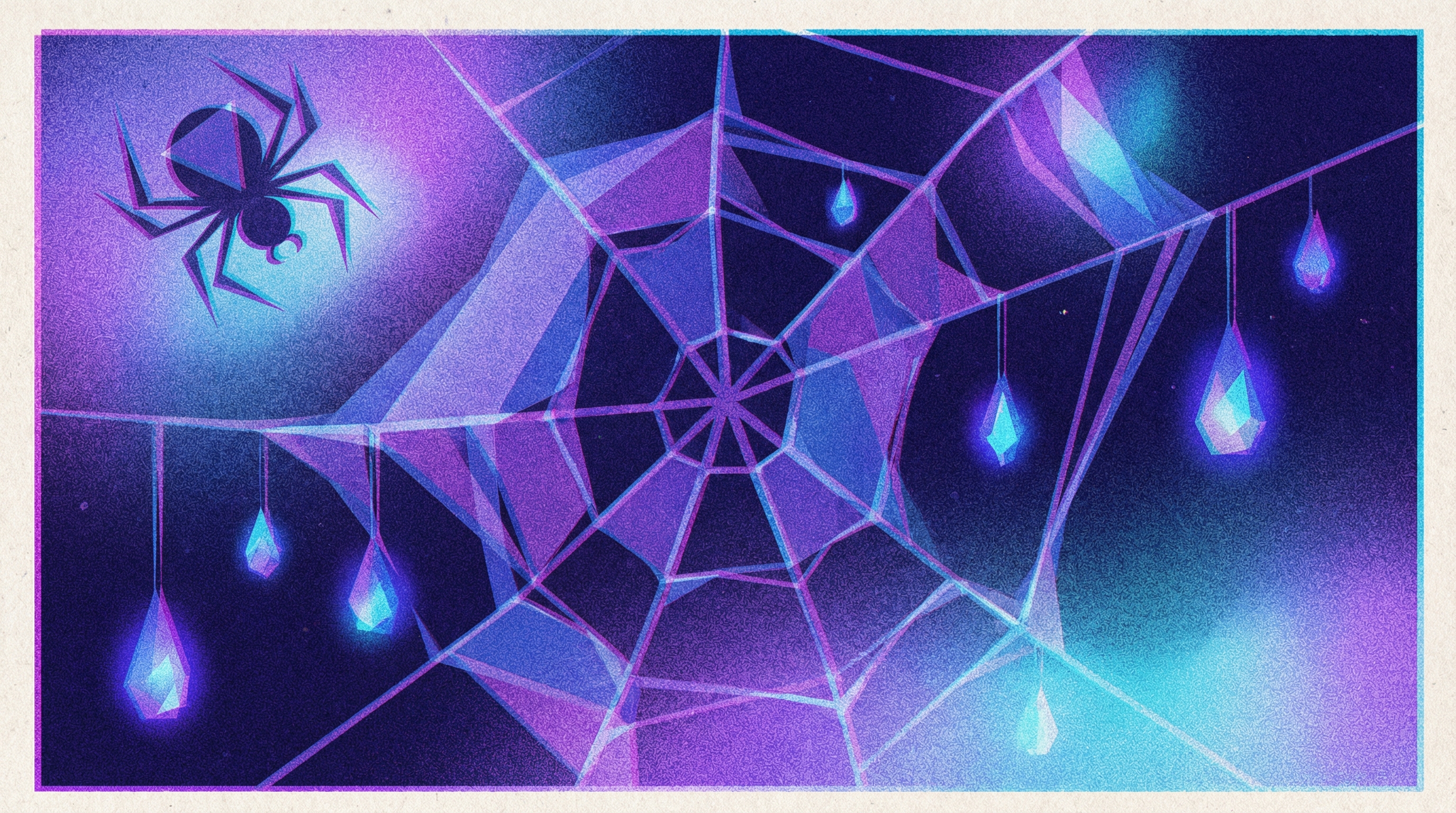
A spider building a web is an architect at work. It weaves connections between distant points, creates structure from nothing, and waits patiently for the result. When this image shows up in your dreams, it often mirrors a creative project you're working on, or a complex plan you're assembling piece by piece.
But webs also trap. A spider stalking prey or descending toward you hits a different nerve entirely. That version of the dream tends to surface during periods when you feel manipulated, controlled, or stuck in a situation you can't easily escape. If a spider is actively pursuing you, the dream shares emotional DNA with chase dreams.
The question is never "are spider dreams good or bad?" It's: "what was the spider doing, and how did I feel about it?"
What do different spider dream scenarios mean?
The spider's behavior in your dream is the primary interpretive key. A single spider quietly weaving in the corner tells a very different story than hundreds of spiders swarming your bedroom.
| Dream Scenario | Common Interpretation | Signal |
|---|---|---|
| Spider weaving a web | Creativity, patience, building something complex | Positive |
| Giant spider | An overwhelming problem or magnified fear | Warning |
| Spider biting you | Conflict with a controlling person, betrayal | Threat |
| Trapped in a web | Feeling stuck in a relationship, job, or obligation | Frustration |
| Killing a spider | Overcoming a fear, ending a toxic situation | Resolution |
| Many spiders crawling | Multiple anxieties or responsibilities piling up | Overwhelm |
| Spider crawling on you | Boundary violation or something "getting under your skin" | Discomfort |
One thing worth noting: the size of the spider often correlates with the perceived size of whatever it represents. A tiny spider might reflect a minor annoyance. A massive one usually maps onto something that feels bigger than you can handle.
What does psychology say about spider dreams?
The Jungian framework offers the most useful lens for spider dreams. Carl Jung associated spiders with the "shadow self," the parts of your personality you repress or refuse to acknowledge. A spider showing up in your dream might represent a quality you need to confront: your own manipulative tendencies, a capacity for patience you underestimate, or creative instincts you've been ignoring.
"One does not become enlightened by imagining figures of light, but by making the darkness conscious. The shadow is a living part of the personality and therefore wants to live with it in some form."
Freud took a different angle. He connected spiders to the "phallic mother," interpreting spider dreams as expressions of complex feelings toward maternal figures. Whether or not you buy Freudian theory, the connection to parental dynamics shows up often: people report spider dreams during periods of conflict with their mothers or when processing childhood authority issues.
Modern sleep research through the lens of the continuity hypothesis has a simpler explanation: if spiders trigger strong emotions for you (whether fear or fascination), your sleeping brain is more likely to use them as emotional stand-ins for whatever you're processing. People with arachnophobia report more spider dreams during high-stress periods, not because spiders are inherently meaningful, but because they're the most emotionally charged image available to the dreaming mind.
Capture spider dream details instantly
DreamStream's voice recording captures your spider dream the moment you wake up, while sensory details are still fresh. The AI then analyzes the spider's behavior, your emotional response, and recurring patterns.
Do spider dreams mean different things across cultures?
Yes, and the differences are substantial. The cultural framework you grew up with shapes how your brain assigns meaning to spider imagery.
- West African / Native American traditions: Anansi (West Africa) and Spider Woman (Hopi, Navajo) are creator figures. Spiders represent wisdom, storytelling, and the weaving of fate. A spider dream in these traditions is often read as a positive omen, connected to creative power.
- Western / European traditions: Christianity sometimes associates spiders with the devil or deception. The Victorian era solidified the "creepy crawly" association. Spider dreams in Western contexts more often map onto fear or disgust.
- Japanese culture: The spider spirit (Jorōgumo) is a shapeshifter, meaning spider dreams can signal deception or hidden intentions in someone close to you.
- Hindu traditions: Maya, the weaver of illusions, connects to spider symbolism. A spider dream might signal that you're caught in an illusion or need to see through surface-level appearances.
Your cultural background acts as an interpretive filter. The same image of a spider weaving can mean "creative genius at work" or "someone is trapping you" depending on the lens you grew up with.
Why do I keep dreaming about spiders?
Recurring spider dreams point to an unresolved situation your subconscious keeps circling back to. If spiders show up repeatedly, something in your waking life matches the emotional profile: feeling trapped, feeling creative but blocked, or sensing manipulation in a relationship. Recurring dreams in general correlate with frustrated psychological needs, and spider dreams are no exception.
Track the timing. Do spider dreams cluster around work deadlines? Family visits? Specific relationships? The pattern reveals the trigger. Once you identify it, the dreams often diminish on their own because your conscious mind has caught up with what your subconscious was trying to flag.
Arachnophobia complicates this. If you genuinely fear spiders, the recurring dreams may be anxiety-driven rather than symbolic. In that case, the spider is less of a metaphor and more of a stress barometer: the dreams intensify when your baseline anxiety rises, regardless of the specific stressor.
What should I do after a spider dream?
Record the details immediately, especially the spider's behavior and your emotional response. These two elements carry 90% of the interpretive value.
Key questions to answer in your journal:
- What was the spider doing? (Weaving, biting, crawling, hiding, multiplying)
- How did I feel? (Terrified, curious, calm, disgusted, fascinated)
- Where was the spider? (Your home, workplace, an unfamiliar place)
- Did I interact with it? (Running, killing it, watching, talking to it)
Then map those answers onto your waking life. If the spider was weaving and you felt calm, look at what you're building right now. If it was threatening and you felt trapped, look at what feels inescapable. The dream is a mirror, not a prophecy.
Spot spider dream patterns over time
DreamStream's Dream Radar tracks recurring symbols like spiders across all your dreams. See whether they cluster around specific emotions, life events, or stress periods, and understand what your subconscious is flagging.
The bottom line
Spiders are one of the few dream symbols that genuinely carry both positive and negative weight. A spider weaving is a creator. A spider hunting is a predator. Your spider dream is telling you which role resonates with your current situation. The trick is to capture the details before they fade and connect the dots with honest self-reflection.